
Gochujang and Coconut Shrimp Noodle Soup is a wonderfully comforting dish that brings together vibrant flavors and enticing aromas in every bowl. This recipe is nothing short of a warm embrace, offering a spicy kick from the gochujang and creamy richness from coconut milk. It’s the kind of meal that’s perfect for chilly evenings or when you want something both hearty and satisfying. With its quick and easy step-by-step instructions, this dish is sure to become a family favorite, while its stunning presentation makes it a showstopper for gatherings and special occasions.
Ingredients
- 2 tablespoons avocado oil: This oil provides a light flavor and is perfect for sautéing.
- 1/2 cup halved and thinly sliced shallot: Bringing a slightly sweet and aromatic quality, shallots are a delightful addition to this soup.
- 3/4 cup very thinly sliced red bell pepper: These peppers add bright color and a hint of sweetness, enhancing the overall flavor profile.
- 3 garlic cloves, minced: Garlic infuses the broth with an irresistible aroma and depth.
- 1 teaspoon finely grated fresh ginger: Ginger adds warmth and a zesty kick that complements the other ingredients beautifully.
- 2-3 tablespoons gochujang paste, plus more to taste: This Korean chili paste delivers a rich, fermented heat that defines the soup’s character.
- 1 tablespoon white miso paste: Adding umami flavor, miso paste rounds out the broth beautifully.
- 2 cups low-sodium chicken broth: A foundational ingredient that enhances the soup’s savory base.
- 1 cup unsweetened coconut milk: Creamy, rich, and not too sweet, coconut milk melds fantastically with the spice.
- 1 teaspoon toasted sesame oil: This oil adds a nutty flavor that elevates the soup.
- 2 tablespoons tamari or low-sodium soy sauce: For a dash of saltiness and savory complexity.
- Zest of 1/2 lime: Lime zest brightens the broth with a refreshing citrus note.
- 1 tablespoon coconut sugar: A hint of sweetness to counterbalance the heat and acidity.
- Kosher salt, to taste: Essential for enhancing the flavors.
- 3 green onions, thinly sliced on the diagonal (white and green parts): Adding crunch and fresh flavor to the garnish.
- 1/2 pound peeled, deveined, and tail-off shrimp (36/40 count): Succulent shrimp are the star protein, absorbing the soup’s flavors.
- 1 tablespoon lime juice: A splash of lime juice just before serving brings everything to life.
- Prepared rice noodles, miracle noodles, or white rice (for serving): A comforting base that soaks up all the delicious broth.
Step-by-Step Directions
-
Heat the oil: In a large pot set over medium heat, add the avocado oil. Once warmed, toss in the sliced shallots and red bell pepper. Sauté them gently, stirring until they soften—this should take about 5 minutes.
-
Add flavors: Stir in the minced garlic and grated ginger, cooking for an additional minute until fragrant. Follow with the gochujang and white miso paste, mixing thoroughly to combine.
-
Incorporate the broth: Gradually pour in the low-sodium chicken broth while whisking continuously until the mixture is smooth. Next, stir in the coconut milk, toasted sesame oil, tamari, lime zest, and coconut sugar, and bring the sauce to a rapid simmer.
-
Simmer gently: Once the broth is bubbling away, reduce the heat to medium-low and allow it to simmer gently. Taste the broth at this point and season with kosher salt as desired, keeping in mind that the other ingredients impart saltiness.
-
Cook the shrimp: Add the sliced green onions and shrimp to the pot. Stir to ensure even cooking. Cover the pot, allowing the shrimp to cook through, typically about 4 to 6 minutes, or until they turn pink and opaque.
-
Finish the soup: Just before serving, drizzle in the lime juice for an added zing. Serve the steaming broth over your choice of prepared rice noodles or white rice, garnishing with additional green onions and fresh cilantro for a burst of color and flavor.
Tips & Tricks
- Customize your spice level: Adjust the amount of gochujang according to your heat preference. If you enjoy spiciness, feel free to add extra at the end for a kick.
- Frozen shrimp: If you don’t have fresh shrimp, frozen shrimp can work perfectly; just ensure they are thawed before adding them to the soup.
- Vegetable options: Sneak in some vegetables for added nutrition—mushrooms, bok choy, or spinach can complement the soup well.
Serving Suggestions & Pairings
Gochujang and Coconut Shrimp Noodle Soup is delightful on its own but can be accompanied by a crisp Asian-style salad or spring rolls for a complete meal. Serve it with lime wedges on the side for an extra pop of freshness. This soup is perfect for cozy family dinners or casual gatherings with friends, as its vibrant flavors and beautiful presentation will impress anyone at the table.
Nutritional Information
This dish is not only flavorful but also fairly balanced. A typical serving (with shrimp and noodles) contains approximately:
- Calories: 400
- Protein: 25g
- Carbohydrates: 50g
- Fat: 15g
- Fiber: 2g
This soup provides a good mix of protein and carbohydrates, ensuring it keeps you satisfied without feeling heavy.
Storing Tips & Variations
To store leftovers, simply place them in an airtight container in the refrigerator. It will keep well for 3-4 days. If you want to freeze it, be sure to leave out the noodles, as they can become mushy when thawed. Just reheat gently on the stove, adding fresh noodles at that time for the best texture.
Consider swapping shrimp for other proteins like chicken or tofu, or try adding extra veggies like snap peas or carrots for a colorful twist.
Conclusion
Gochujang and Coconut Shrimp Noodle Soup is an exceptional dish that combines warmth, comfort, and a touch of heat. It’s easy to prepare and filled with flavors that will make your taste buds dance. We encourage you to try this recipe, embrace the delightful complexities of its ingredients, and share your experience with others. Dive into this bowl of deliciousness, and savor every nourishing sip!
FAQs
1. Can I make this soup vegetarian?
Yes! Simply substitute the shrimp with tofu or your favorite plant-based protein and use vegetable broth instead of chicken broth.
2. What if I don’t have gochujang?
While gochujang is key to the soup’s flavor, you can use a combination of chili paste and a bit of sugar as a substitute, or alternatively, try adding some sriracha for a similar heat.
3. Can I use other types of noodles?
Absolutely! You can use any type of rice noodles, udon, or even whole wheat noodles based on your preference.
4. How spicy is this soup?
The spice level can vary depending on the amount of gochujang you use. Feel free to start with a small amount and adjust to your taste.
5. Can I add other vegetables to this soup?
Yes! Feel free to include any vegetables you like—carrots, snap peas, or bok choy enrich the soup with nutrition and color. Just add them to the pot when you add the shrimp, allowing them to cook through.
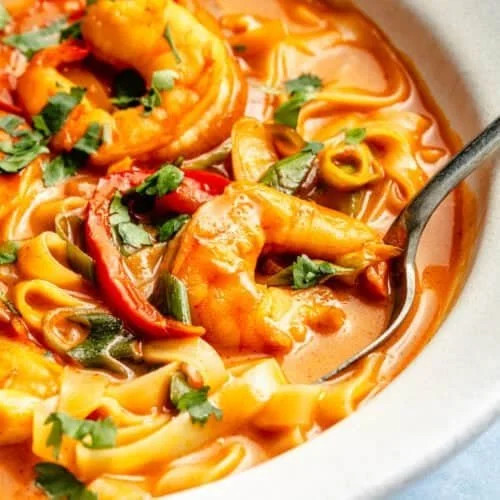
Gochujang and Coconut Shrimp Noodle Soup
Ingredients
Method
- In a large pot set over medium heat, add the avocado oil. Once warmed, toss in the sliced shallots and red bell pepper. Sauté gently for about 5 minutes until they soften.
- Stir in the minced garlic and grated ginger, cooking for an additional minute until fragrant. Add the gochujang and white miso paste, mixing thoroughly.
- Gradually pour in the chicken broth while whisking continuously until smooth. Stir in the coconut milk, toasted sesame oil, tamari, lime zest, and coconut sugar, and bring to a rapid simmer.
- Reduce the heat to medium-low and allow the broth to simmer gently. Season with kosher salt as desired.
- Add the sliced green onions and shrimp, stirring to ensure even cooking. Cover the pot and allow the shrimp to cook for about 4 to 6 minutes until they turn pink and opaque.
- Just before serving, drizzle in lime juice. Serve the soup over prepared rice noodles or white rice, garnishing with additional green onions and cilantro.

Leave a Reply